WIGI HAIR
WIGI HAIR
Bring BEAUTY to your life


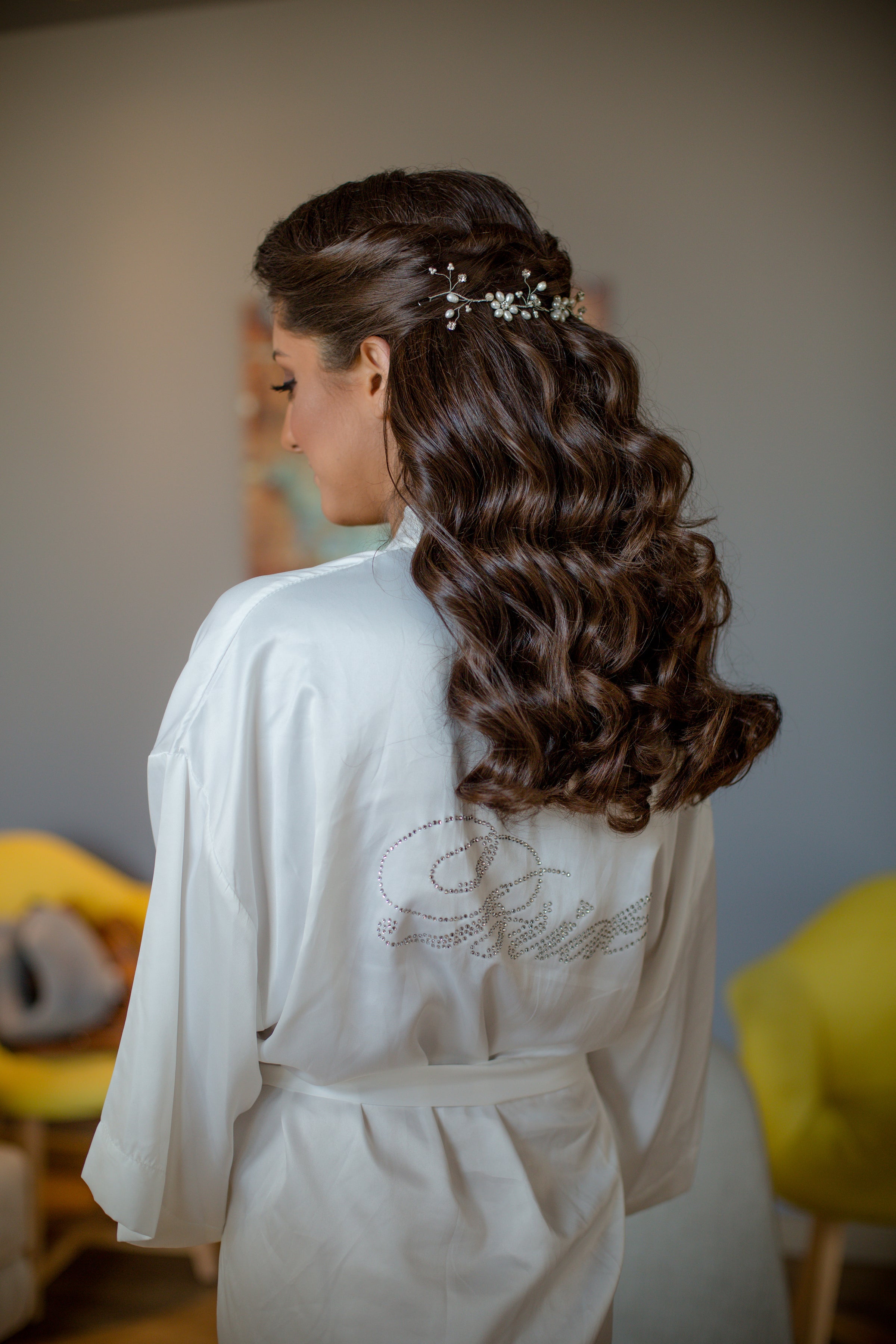

At WIGI Hair, the most common mistake we see isn't choosing the wrong color: it is guessing the extension count. Ordering too few pieces leaves you with a visible and unnatural line between your natural layers, while over-ordering strains your scalp and wastes your budget. To ensure a seamless blend without the guesswork, here is the exact piece-count formula tailored to your specific hair type and installation method.
Before looking at the exact numbers, we must understand why a one-size-fits-all approach never works for at-home hair installations. At WIGI Hair, our expert team calculates your required volume by evaluating three physical characteristics of your natural hair.

Your starting point dictates your destination, meaning the current thickness of your hair determines how many pieces you need to buy.
Fine Hair (Low Density): Gather your hair into a ponytail. If the circumference of your ponytail is less than 2 inches (about the width of a nickel coin), or if you can easily see your scalp when your hair is parted naturally, your hair is fine. You need fewer pieces because your scalp has less surface area to hide connections.
Medium Hair (Medium Density): If your ponytail circumference measures between 2 and 4 inches (the width of a standard lime), you have medium density. This is the baseline for a standard installation.
Thick Hair (High Density): If your ponytail is wider than 4 inches, or if you have a short, blunt cut, you actually need double the amount of extension pieces. This extra volume is necessary to erase the heavy, blunt edge of your natural hair and prevent a visible line of separation where your natural hair ends.
Your styling goals change the exact number of pieces you need to order. Here is a simple breakdown to help you choose:

Adding Volume Only (Keep current length): You only need a partial pack. Order 20 to 30 tape-ins, 50 to 80 I-Tips, or 1 light clip-in set (approx. 50g to 80g).
Standard Full Head (Add moderate length & thickness): This is the baseline for most users. Order 40 tape-ins, 120 I-Tips, or 1 standard clip-in set (approx. 120g to 150g).
Maximum Length & Volume (Short hair to waist-length): To avoid a thin, disconnected look at the bottom, order 80 to 100 tape-ins, 180 to 200 I-Tips, or 2 heavy clip-in sets (approx 200g to 250g)..
Further reading: How to Know What Hair Length Suits You – Expert Tips for Every Face Shape
The physical structure of each extension type directly dictates how many units you must buy to cover your scalp safely and evenly.
Tape-ins (Wide Coverage): Each tape-in is a flat, 4-centimeter-wide panel. Because these panels cover a large horizontal surface area at once, you only need 40 to 60 pieces for a full head. The wide strip distributes the weight evenly, preventing tension on your natural roots.
Individual Strands (Micro Coverage): I-Tips and K-Tips are micro-sized attachments, measuring only 1 to 2 millimeters wide. Because each strand is so tiny, a single piece covers almost no surface area. You must purchase 150 to 200 individual strands to fill the same space as a set of tapes, requiring precise, balanced placement to avoid straining your natural hair.

Now that you know the underlying principles, we can translate these factors into concrete numbers for each specific product type. Here is the industry-standard breakdown used daily by the custom manufacturing and styling teams at WIGI Hair.
Clip-ins are temporary, multi-clip wefts designed for quick transformations, and they are usually sold in pre-packaged sets.
Standard Full Head: A classic clip-in set consisting of 5 to 7 pieces weighing between 120 grams and 160 grams is ideal for fine to medium hair types.
Thick Hair Full Head: If you have dense natural hair, you should look for a heavy-weight set of 10 pieces that weighs between 180 grams and 220 grams. The piece count remains the same, but each individual weft contains more hair density.
Because tape-ins are installed by sandwiching a thin slice of your natural hair between two adhesive strips, you must always calculate your purchase in even numbers.
Standard Count: A complete full head installation typically requires 40 to 60 individual tape pieces, which yields 20 to 30 finished sandwiches.
Weight Guide: This quantity equates to roughly 100 to 150 grams of hair, which is the safest weight limit for the average scalp to support comfortably.
Strand-by-strand methods offer the most realistic movement because they mimic the natural separation of your own hair, but they require the highest piece counts.
Fine Hair: A full head requires 100 to 125 individual strands.
Medium Density: You will need between 125 and 150 strands for a balanced look.
Thick or Blunt Hair: To hide a heavy natural haircut, you will need 175 to 200 strands to create a believable transition.
Sew-in methods involve sewing machine-woven or hand-tied hair wefts onto a track made of silicone beads or braids.
Standard Count: Most full head sew-in installations require 2 to 3 weft bundles, which is equal to about 150 to 200 grams of hair depending on the length of the track.
To make your purchasing decision completely foolproof, we have simplified the math. Use this quick-reference table compiled by WIGI Hair to match your exact natural hair texture with your target installation method.
|
Your Natural Hair Density |
Your Styling Goal |
Recommended Method |
Recommended Piece Count |
|
Fine / Thin |
Subtle volume |
Tape-ins or Lightweight Clip-ins |
30 - 40 Tape-in pieces / 120g Clip-in set |
|
Medium |
Length and density |
I-Tips or Sew-in Wefts |
130 - 150 I-Tip strands / 2 Sew-in Wefts |
|
Thick / Blunt Cut |
Complete transformation |
K-Tips or Heavy Sew-ins |
180 - 200 K-Tip strands / 3 Sew-in Wefts |
Fine or Thin Hair (Protect Roots): Stick to a maximum of 30 to 40 tape-ins or 100 individual strands. Exceeding this limit strains delicate roots, leading to tension hair loss.
Medium Density (Everyday Volume): Aim for 50 tape-ins or 150 individual strands (approx. 150g). This balance creates a full look while allowing you to tie your hair up comfortably.
Thick or Coarse Hair (Prevent the Step Effect): You need at least 180 to 200 individual strands or 3 weft bundles. Any less will make your ends look thin and stringy compared to your thick crown.
Short Blunt Cuts (Erase Blunt Edges): Order a maximum count of 200+ individual strands or 3 heavy wefts. This high density is required to hide the sharp, blunt line of your short haircut.

Even with a detailed guide, ordering your hair online can feel intimidating. To protect your investment and your natural hair, keep these two practical salon rules in mind before you check out.
When you try to save money by purchasing fewer pieces than recommended, you often end up with an unfinished look that is impossible to style naturally.
The Safe Buffer Rule: We always advise ordering 10 percent more hair than your estimated requirement.
These extra pieces are highly valuable for filling in the temple areas, which naturally experience more friction and wear from side-sleeping or hair brushing.
Your scalp will always tell you if you have installed too much weight, and you should never ignore those early signals.
If you experience persistent headaches, red bumps, or a burning sensation after your installation, the weight of the extension pieces is too heavy for your natural roots.
If this happens, visit a professional stylist immediately to remove a few pieces from your most sensitive areas, such as the nape of your neck and the hairline.
Also worth exploring: How Much Do Hair Extensions Cost? Average Prices Explained
That is all the calculations you need to answer the question: how many pieces for a full head installation? Hopefully, this guide helps you evaluate your natural hair density and choose the exact quantity to protect your investment.
If you need help calculating the perfect piece count for your hair, the team at WIGI Hair is always here to assist. We supply premium Vietnamese human hair sourced directly from local donors. Thick from root to tip and ethically collected, our extensions ensure your full head transformation looks entirely your own. Contact WIGI Hair today for a personalized recommendation.
Shop WIGI’s Premium Vietnamese Human Hair Extensions Now!


Leave a comment